Set to the backdrop of the 2001 foot and mouth crisis, And Then Come The Nightjars is the latest in-house production at Theatre Royal Bury St Edmunds.
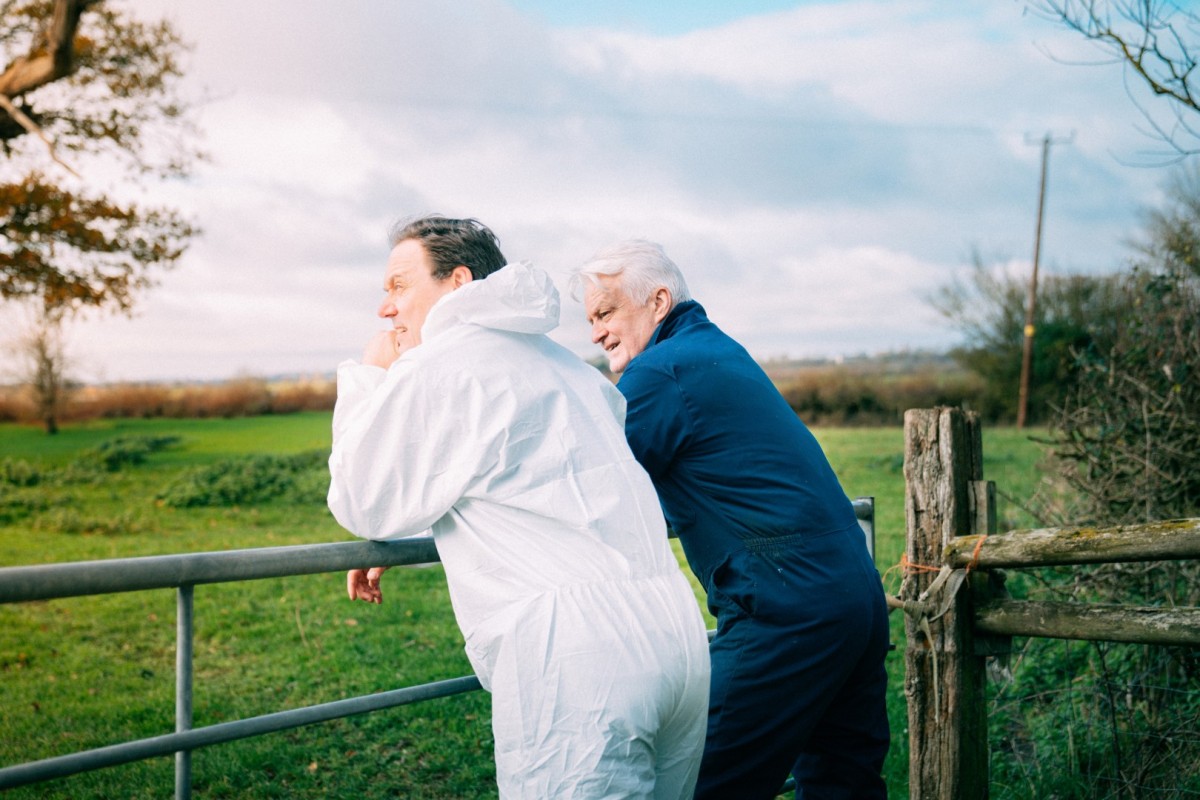
The play follows vet Jeff, and dairy farmer Michael and his herd, as the countryside around them becomes infected by the epidemic. The events of the crisis affected the countryside for long after the initial outbreak.
It explores the events change the course of Michael and Jeff’s friendship over the coming years and how important it is to have someone to lean on in times of hardship.

The play was written by Bea Roberts, a multi-award-winning scriptwriter from the West Country. It won the Theatre503 International Playwriting Award and was adapted into a feature film, winning Best Independent Film at the Chichester International Film Festival.
We caught up with her ahead of its opening in Bury St Edmunds.
What can people expect from your drama And Then Come The Nightjars?
I think when people first hear that the play centres around a farm going through the crisis of the 2001 foot-and-mouth epidemic, it might not sound like a total laugh riot, and I completely understand that.
While the play is set on a farm, the events of 2001 are really the catalyst for what happens in the story. It’s actually a play that takes place over the span of about twenty years, and at its core is a friendship between dairy farmer, Michael, and local vet, Jeff.
These are two men who often really struggle to communicate with each other, and the way they bond, the way they cope is through humour. That’s very much how I bond with people and cope with things myself. I think that surprises a lot of people, as there’s a surprising amount of comedy in the play.
What inspired you to centre the play around the foot and mouth crisis? And what is the relationship between Michael and Jeffery?
Michael and Jeff — without giving away too many spoilers — find themselves torn apart and placed on opposite sides of a conflict. While I wanted the play to be about the crisis of 2001, because I think it was a huge trauma that needed to be marked and hadn’t really been spoken about in popular culture, I also wanted it to be a play about recovery, resilience, rebirth, and finding something new.
Hopefully, the play charts the story of these two men over twenty years. You see an evolving relationship, a deepening friendship, and from the ashes of the crisis something completely new is born. It’s very much like the countryside recovering after winter: the snowdrops always come, and there’s an incredible capacity to heal, renew, and keep going. That’s something I find really inspiring, and I think it really inspires the characters in this play too.
And Then Come The Nightjars was described by The Guardian as ‘savagely funny’. How did you add levity to this play?
Some of the darkest times in my life have been the times when I’ve needed comedy the most and leaned on it the hardest. So while the play takes the issues, the characters, and the struggles they face very seriously — struggles based on very real experiences that people in farming communities have faced, and unfortunately continue to face — the characters never take themselves completely seriously. I think there’s a lot in that.
A lot of the farmers I know are very dry. I grew up in a farming community, and farmers are at the pointy end of life and death. They have a very stressful job, dealing with the life cycle of animals if you’re raising a herd. I think that lends itself to a certain stoicism, a certain dryness, and a black comedy — a way of coping with life, and of getting up in the morning and carrying on.
So although it is a play with seriousness, darkness, and tragedy in it, hopefully there is also comedy and light — and I hope you enjoy it.
And Then Come The Nightjars runs from 6 to 21 March 2026 at Theatre Royal Bury St Edmunds, tickets £12-£30.