
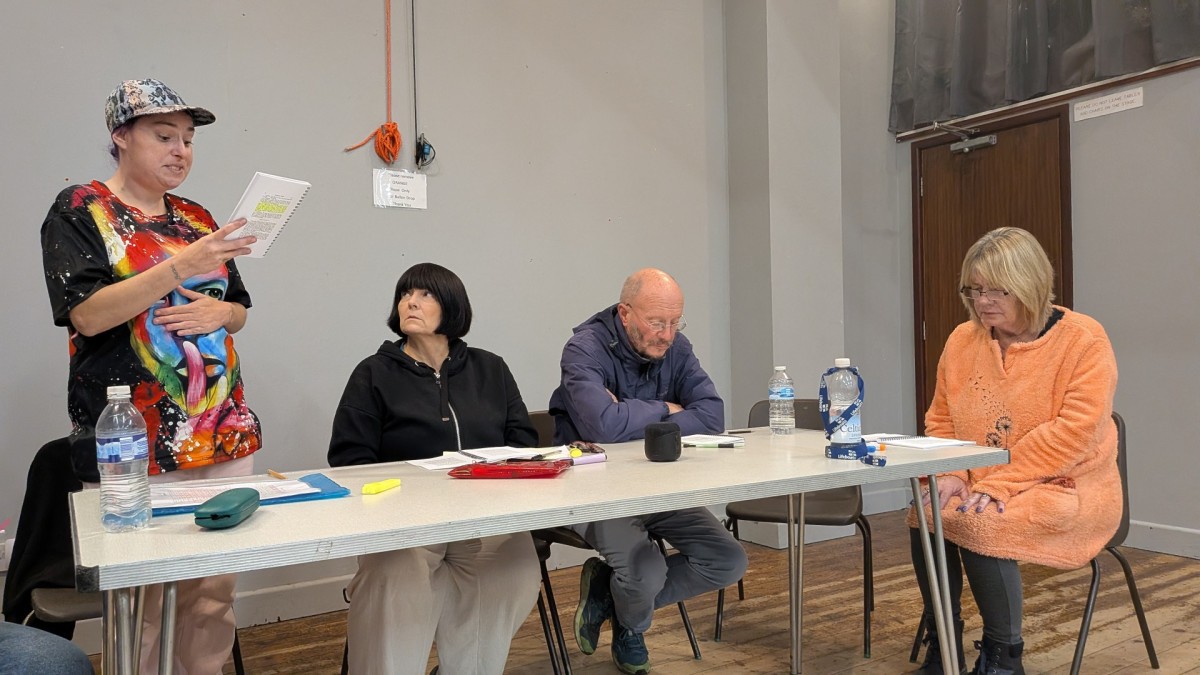
New Lowestoft-based theatre group North Sea Ensemble is preparing for its debut production, launching with George Orwell’s Animal Farm.
The group is being supported by Luminescence Theatre. We caught up with co-artistic director Archie Muir to find out about the group and the show.
What is the North Sea Ensemble?
The North Sea Ensemble is a new amateur theatre group based at the Uplands Community Centre in Lowestoft, aiming to give adults in and around the town more opportunities to get involved in non-musical theatre.
We’re particularly keen to create opportunities for people to get into theatre without needing previous experience or skills in acting, singing or dancing. It’s about opening up theatre to more people, developing performance skills, and bringing different kinds of theatre to local audiences.
The ensemble is currently running as an eight-week pilot, supported by Arts Council England, to help us explore how we can establish a sustainable longer-term model to continue providing these opportunities in the future.
There are already established theatre groups in Lowestoft. What makes North Sea Ensemble different?
Lowestoft has some fantastic established theatre groups, and we’re not setting out to compete with them. We want to work alongside the existing theatre scene, complementing what’s already available rather than trying to replace it.
Our particular focus is on non-musical theatre, giving adults the opportunity to participate in plays without musical performance being part of the format. We know that musicals are a brilliant form of theatre, and they sell really well in Lowestoft, but they’re not for everyone either as a performer or as an audience member.
The North Sea Ensemble is about filling that gap in provision and giving people another route into theatre.
How has Luminescence worked with the group?
Luminescence Theatre Company is the organisation supporting and managing the North Sea Ensemble. We’re a team of three theatre professionals, bringing our experience to the project through artistic direction, access support, and bringing in professional training and rehearsal techniques.
Our role is to give the group members the support and tool they need to develop as performers, and creating an environment where people with different levels of experience can work together and take on new challenges.
We’re also responsible for the operational side of the project. This includes securing funding and exploring how the ensemble can continue beyond its initial eight-week pilot. The pilot is an opportunity for us to test the model, understand what works, and build a sustainable model to secure a future for the group.
Why choose Animal Farm as the first production?
Animal Farm is a story that many people are already familiar with, which gives us a useful starting point when establishing a new group and introducing audiences to a new name. Building trust and recognition takes time, so a familiar title helps people understand what we’re offering.
But the script itself was equally important. This adaptation by Nelson Bond offers plenty of opportunities to develop interesting characters and explore creative staging, while striking a balance between accessibility for people who are new to acting and meaningful challenges to develop those with previous experience.
What approach are you taking to the show? Is this a traditional performance, or something different?
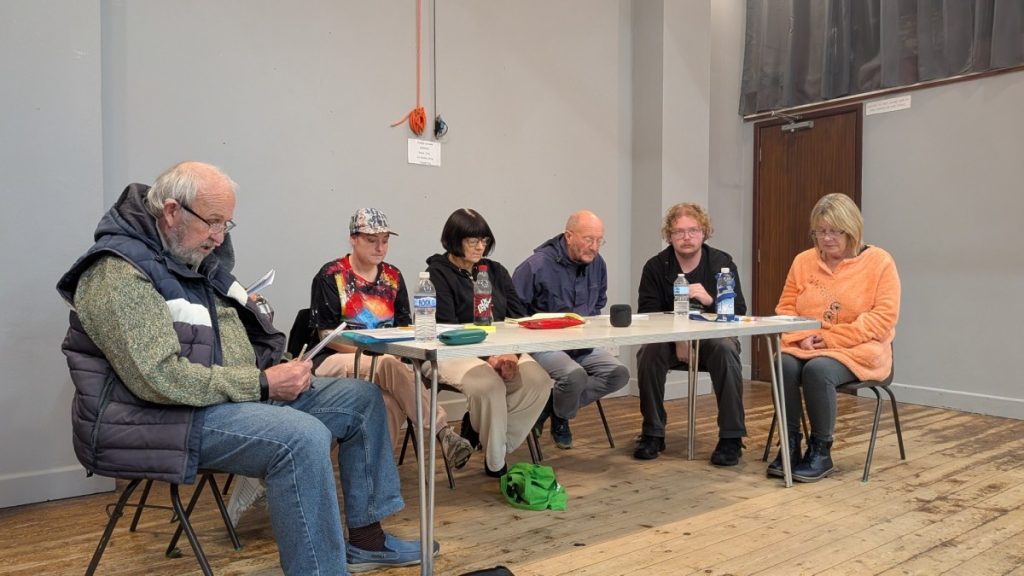
We’re approaching the production differently from a conventional play. The adaptation takes the form of a dramatic reading, so rather than relying entirely on naturalistic dialogue and the audience connecting with characters through realistic interactions, we can put much more emphasis on the visual composition of the stage.
One phrase I’ve used with the cast recently is that you should be able to freeze the show at any point, take a photograph, and sell it for millions. Every moment is visually striking and ensuring that the physical arrangement of the performers tells its own story. Levels have been a major part of our blocking, helping us create striking stage pictures and communicate the relationships between characters.
The result we’re working towards is a visually bold, brutal and throught-provoking performance. The simplicity of the format doesn’t mean the production is simple in its impact, and in fact there’s some really nice pieces of direct address that have had me lost for words in rehearsals.
The political world has changed a lot since Animal Farm was written. How does it resonate today?
The world has indeed changed enormously since Orwell wrote Animal Farm. The Soviet Union has dissolved, political systems have transformed, and there have been major advances in human rights. But the themes at the heart of Animal Farm – corruption, greed, power, class and discrimination – haven’t disappeared.
We’re still seeing minorities, whether defined by sexual orientation, ethnicity, religion or disability, facing discrimination and hostility. The development of social media has changed how visible these experiences are and how quickly prejudice and misinformation can spread.
And that is relevant in Animal Farm. Take Squealer, for example. His ability to manipulate language, distort the truth and convince the other animals to accept increasingly unreasonable things is central to how the pigs maintain their power. We see similar techniques in the modern world, where misinformation can spread rapidly and day-by-day the line between fact and fiction is increasingly harder to distinguish.
Another contemporary parallel that influenced our staging, particularly throughout Act 2, is the Partygate political scandal that occurred during the COVID-19 lockdowns. While the public were being asked to make significant sacrifices, follow restrictions and, in some cases, endure isolation from loved ones at the most difficult moments of their lives, those responsible for setting the rules were found to have broken them themselves. That contradiction captures something fundamental to Animal Farm in the idea that those in power can exempt themselves from the rules they impose on everyone else.
What’s particularly striking is how the animals’ freedoms are gradually eroded, often through small changes that are presented as being for their own good. It raises questions about how power is maintained, how people are convinced to accept it, and what happens when those in authority are no longer held accountable.
Although Animal Farm was originally written as an allegory for the Russian Revolution and the rise of Stalinism, its wider themes are not confined to any single historical period. Wherever power can be abused, truth manipulated, and groups of people treated as less deserving than others, the story has something relevant to say.
- Animal Farm is at Uplands Community Centre, Lowestoft on Friday 27 and Saturday 28 November 2026, tickets £3-£5. Visit the Luminescence Theatre website for booking and details.