
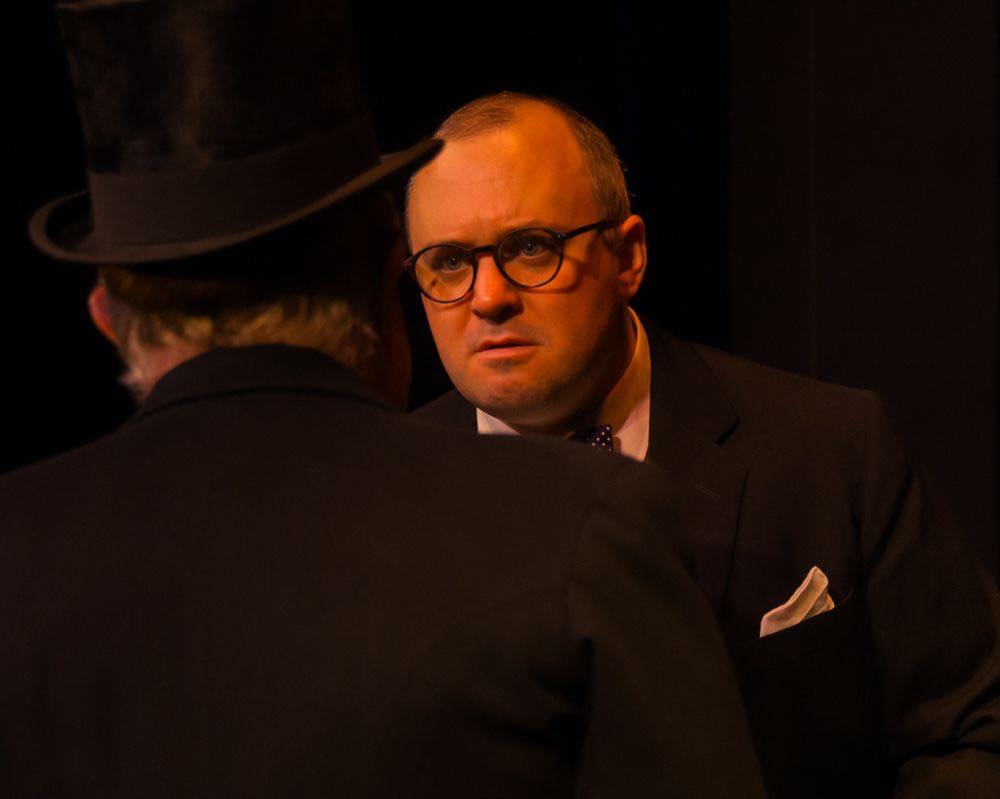
Politics and broadcasting clash – for the first but by no means the last time – in this period drama on the origins of the BBC.
The fledging radio broadcaster had been prevented from airing news bulletins due to pressure from newspapers fearing competition, but the 1926 General Strike changes all that. With print works paralysed – other than an official government newspaper – the wireless became an important source of news.
It also became a point of conflict, with clashes between then chancellor of the exchequer Winston Churchill and the Beeb’s general manager John Reith on how far it should follow the government line.
Jack Thorne’s script also brings in Reith’s personal life, and a complex triangle between him, his wife, and a young man and his eventual wife – and to a lesser degree Churchill’s home life, with Clemmie.
Monty Jordan strikes a convincing note as Churchill, resisting the urge to play up to a caricature while matching his memory in the popular imagination. This is a younger, less assured, and slightly less drunk version than the Churchill we are used to.
Jez Pike’s Reith is more enigmatic: at work he is mostly assured, but twinges of emotional frailty pervade. In the flashbacks to his early life, he is a curious combination of ruthless and giddy.
As Reith’s secretary, Hannah Jones switches between character and narrator, with a bright and doughty spirit that hides hidden traumas; as the dialogue suggests, the voice can give away our secrets.
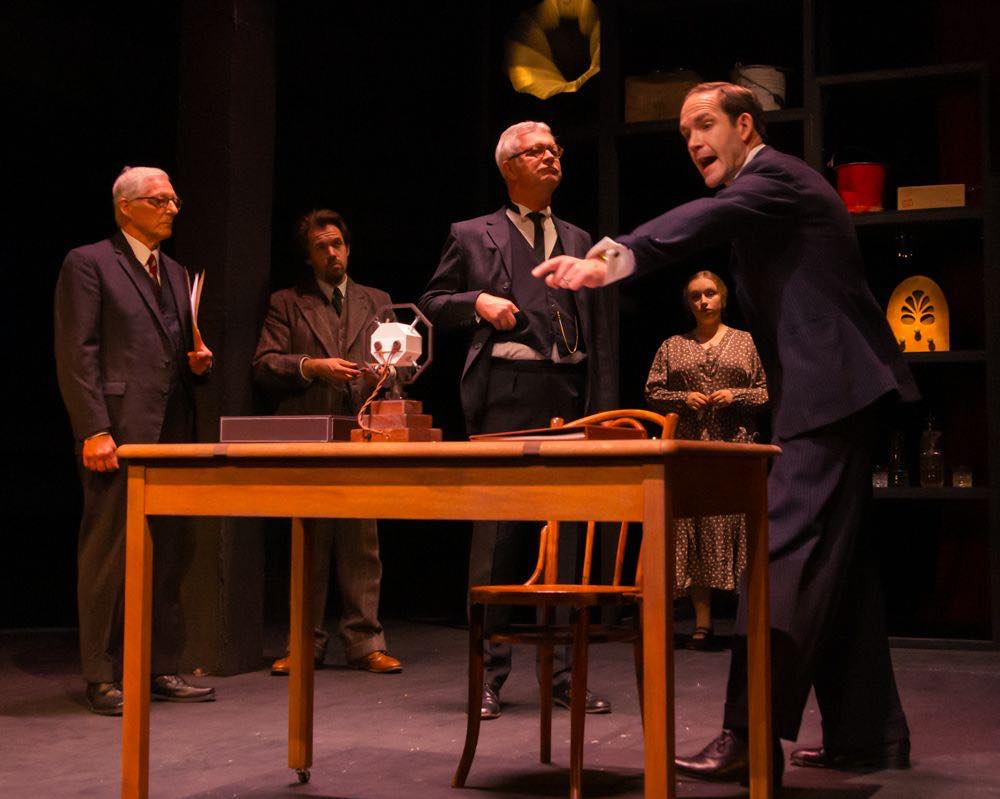
There is a extensive supporting cast, including Lawrence Dunant as an agitating chief engineer; Jack Morter as Reith’s naïve early romantic interest; Jonathan Cooke as a restrained but calculating Prime Minister Baldwin; Kevin Oelrichs as his dutiful and scheming apparatchik; and Paul Finlay and Stephen Mears as textbook union leaders.
Director Ginny Porteuous handles the complex interlocking stories well, and there are numerous deft touches, including some entertaining radio sound effects and an banjo and ukulele wielding interval act. John Holden’s stage design flexes readily between domestic, studio, office, and even church; it is evocative without overbearing.
It’s an engaging and interesting production, though to some extent the script suffers from the crisis of impartiality that still often plagues the BBC: it fails to come down on any one side. Should our sympathies lie with the government or the trade unionists, both causing suffering? Churchill or Reith, both egoists in their own ways?
- When Winston Went To War With The Wireless continues at Maddermarket Theatre, Norwich until Sunday, 20 September 2026. Tickets £10.50-£16.80.