
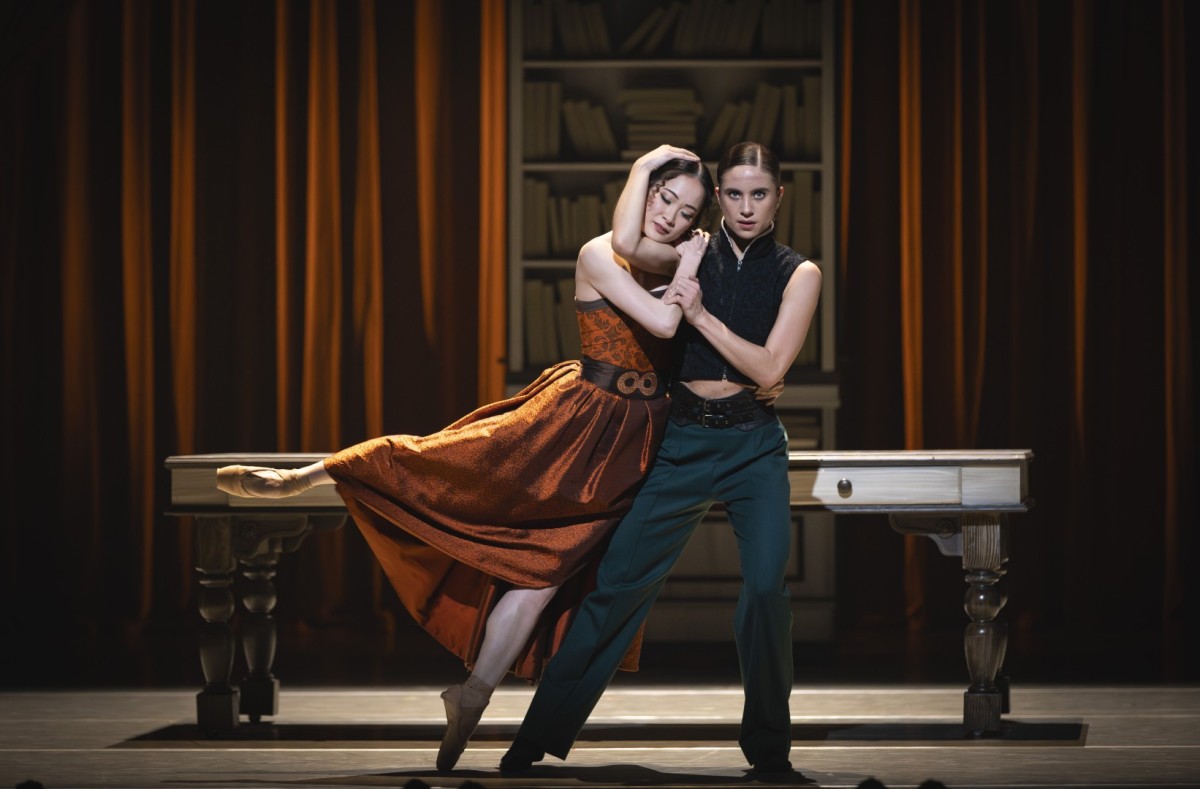
The life of a woman regarded by some as the “first modern lesbian” is retold in this promising new ballet.
Born in 1791, Anne Lister was part of a wealthy Yorkshire family, and eventually inherited and controlled the family’s estate and businesses. The ownership gave her unusual freedom for the time, which she used to travel the world.
It also enabled her to have a series of relationships with women without some of the usual societal pressures.
After her death in 1840 her story was known locally – including her habit of dressing in black, in the style of gentleman of the time, and her “masculine singularities” – but it wasn’t until researchers decoded her copious diaries in the 1980s that her full story became more widely known.
They went on to inspire the BBC series Gentleman Jack, and now this Northern Ballet (and Finnish National Opera and Ballet) reinterpretation, which focuses on two key relationships while adjusting and reworking the timelines of her wider life.
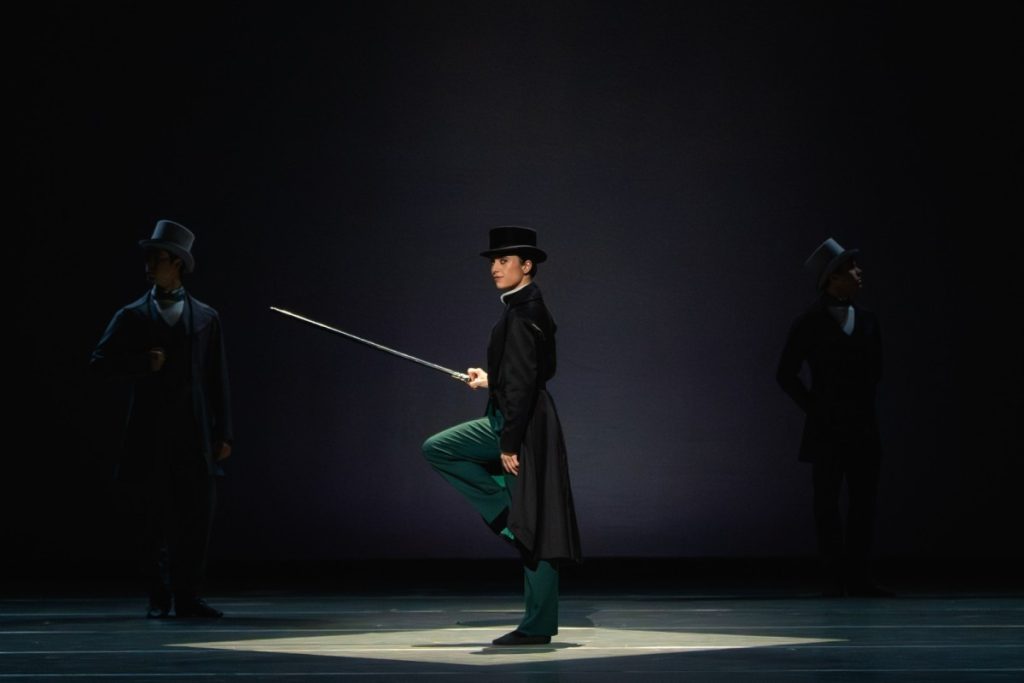
The ballet premiered in March before heading on tour with Norwich only its fifth stop, so it is early days compared to some established tales – and there is a lot of promise.
Annabelle Lopez Ochoa’s choreography delivers some charming scenes, but there are also missed opportunities.
In the first act after establishing the relationship between Lister (performed tonight by Nida Aydınoğlu) and the married Marianna Lawton (Sarah Chun), we see Lawton parading through the garden in a classic ballet pas de deux wither her husband (Jonathan Hanks), but their moves are deliberately just that little bit off – perfectly executed to show their uncomfortable pairing. That transforms when Lister arrives, with Aydınoğlu all sinuous limbs and eye contact. There is a real frisson.
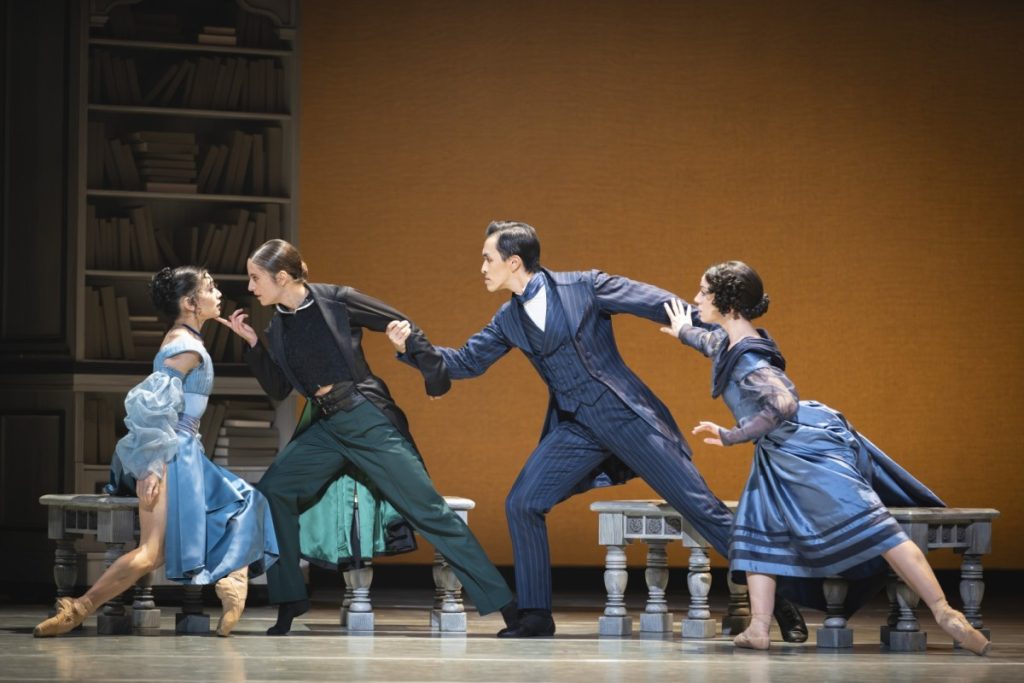
A quartet featuring Lister, a later lover Ann Walker (Julie Nunès), and her guardians Christopher Rawson and his wife (Miguel Teixeira and Alessandra Bramante) also fizzes with energy. Their movements become an electric game of musical chairs as the Rawson’s try to block Lister’s advances on Walker, but the two are smitten and unstoppable.
Somewhat surprisingly, the actual seduction scenes with Lister and Lawton, and with Walter, are a little flatter. There is connection, some entwined limbs, and some cat-like arching, but given Lister’s diaries are famously explicit the love making is treated quite coyly – with Walter and Lister even popping off behind a bookcase like the Hays code was still in force.
Several segments featured a ‘chorus of words’ meant to represent Lister’s compulsive writing, but both the costumes and the choreography were lacking; ultimately adding little to our understanding of the story. The corps were also under-coordinated at times: if you’re going to have multiple people banging sticks onto the stage, you need to get them all on the beat.
Northern Ballet have had a tumultuous relationship with musicians recently, so it was a pleasure to have a live orchestra performing Peter Salem’s score.
Elsewhere the budgets did feel pinched: while Christopher Ash pulled off some nice tricks with lighting (especially some Hitchcockian shadows during Lister and Walker’s row with the Rawsons) overall his design was noticeably frugal. The same bookcases, table, and drapes, were used for scenes from a stately home, to a colliery, to Paris. In two tea-drinking scenes (where spoon stirring was playfully emphasised for laughs), the cast were forced to awkwardly lift up saucers to their faces for the lack of a few magnets to allow cups to separate, but still be danced with.
On the flipside, there was unnecessary expense on standalone screens showing scene-setting imagery – neatly executed but lacking impact – and a boxed-in treadmill repeatedly brought centre-stage for Lister to stride on. If a ballet company can’t figure out how to get a dancer to show movement without a visually intrusive bit of machinery, they really should go home.
Northern Ballet really do know how to do these things so these missteps are all the more frustrating, when the central story is good and there are several flashes of brilliance. With a lesser company, I’d be more inclined to let things slide – this is still an enjoyable show.
It’s a rare chance to see a ballet in its early stages, just a few performances in – and with real potential to develop and grow.
- Gentleman Jack by Northern Ballet continues at Norwich Theatre Royal until Saturday 30 May 2026, then touring nationally. Tickets £15-£55.
I have to both agree & – fairly vehemently – disagree with James, here.
Agree:
Lots of promise, some very good performances but yes, stick-banging a little off (but this is a fairly minor flaw).
Vehemently disagree:
I thought the screens & the treadmill were a great idea – & a nice nod to a non-ballet aficionado.
I also think the ‘coy’ sex scenes were quite nicely done too.
Whilst I am by no means a prude & I understand the diaries were pretty explicit (so perhaps, yes, the scenes lacked the punch they could have delivered) nevertheless, I found it rather appealing for more to be left to the imagination than could have been. I felt the scenes conveyed desire & eroticism & I don’t feel anyone, even non-regular ballet-goers, could have been left in much doubt as to what was going on.
I thoroughly enjoyed this & thought it an excellent Northern Ballet production – & I have seen quite a few.